

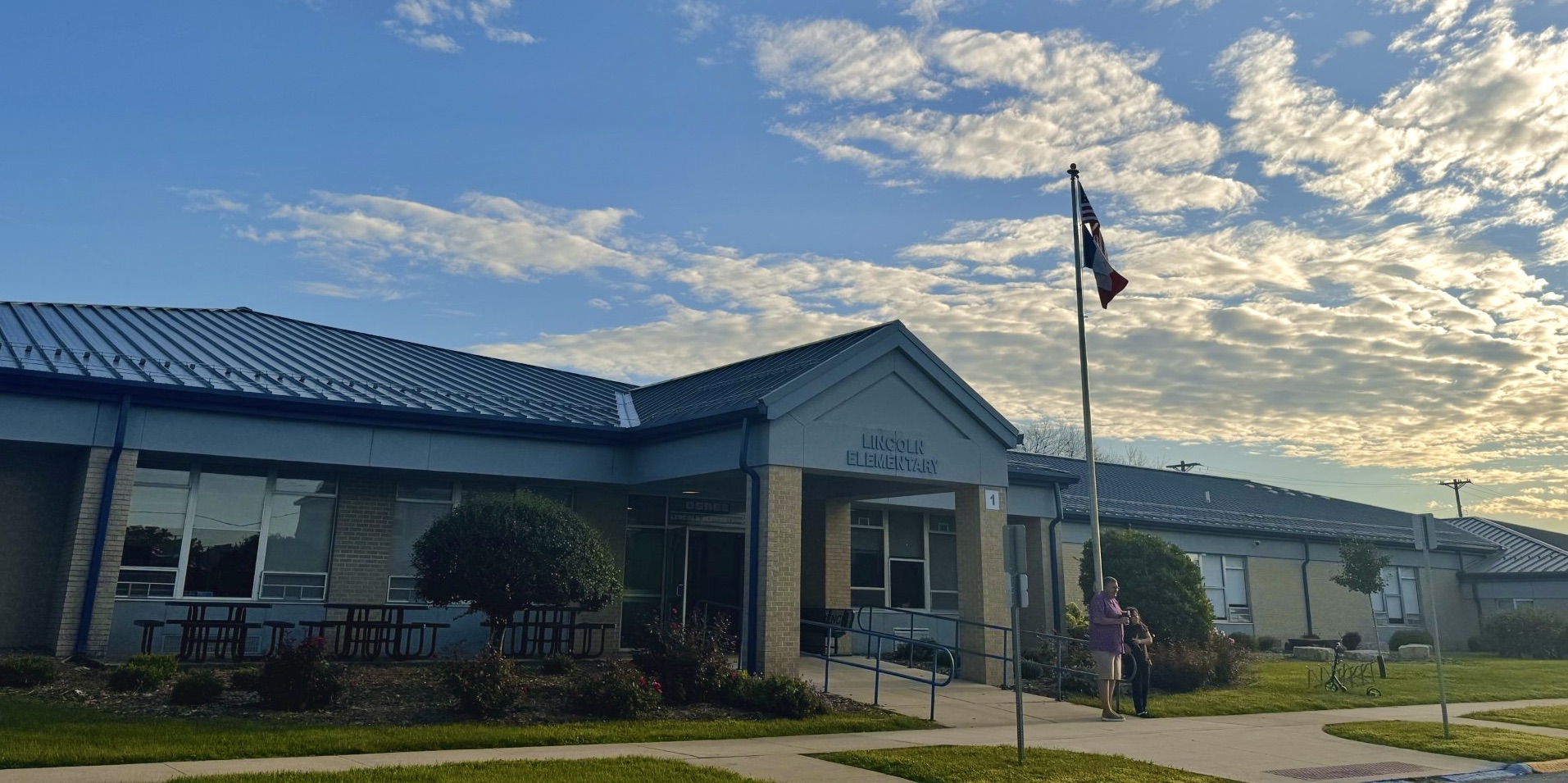
Osage Community School District is weighing several options to address growing space constraints at Lincoln Elementary School, where a combination of rising enrollment, expanding early-childhood programs, and limited classrooms has pushed the building to capacity.
Superintendent Barb Schwamman said Lincoln Elementary houses around 400-plus pre-kindergarten to fourth-grade students, and several recent program changes have increased the need for additional space.
“We successfully added and switched to providing full-day preschool in the 2024-2025 school year, and due to state regulations, we can only put 20 in one room with a teacher and para,” Schwamman said.
The district also offers a KPrep program for 5-year-olds who are not yet ready for a full five days of kindergarten.
“We also have a large second-grade class of four sections moving through,” she said. “Space is not a new issue at Lincoln, but is now coming to a head as the daycare needs all of the rooms in their center.”
The district has shared space with the daycare located on the same block as the school. The district leases the land to the center, and the two facilities share the playground. Students walk between the school and the daycare as a class when instruction occurs there. The daycare also uses parts of the school building before and after school. As the child care center expands its own needs, the school no longer has access to the rooms it once used.
To address the crowding, the school board is considering a range of possibilities.
“The school board is looking into all options, including but not limited to bringing portable classrooms on site, adding on to Lincoln Elementary, or moving 4th grade to the middle school, where there are empty rooms that could house them,” Schwamman said. “All options have pros and cons and are being looked at through multiple lenses- cost and efficient use of tax dollars, best educational practices and developmentally appropriate practices, long- and short-term implications.”
The district is also navigating several challenges as it works to determine the best path forward. Schwamman said the board must balance finances, construction timelines, and uncertainty about future enrollment.
“Cost and timeframe, not being able to predict the future of enrollment and how the community will embrace the decision that the board will ultimately make,” she said.
Teachers and students are already feeling the effects of the limited space. According to Schwamman, teachers have had to teach in a room off the library with no windows. That room is filled with shelves piled high with books. Grade levels are spread apart, limiting collaboration.
“Not all teachers are close to colleagues in the same grade level, which makes things more challenging,” she said.
Ideally, class sections would have 20–23 students, but some now exceed that because no additional rooms are available.
“Even an old storage area has been converted to a special education classroom,” she said.
The district is exploring how to pay for a potential expansion.
“The hope is to try and fund it with SAVE dollars and borrowing against future SAVE as we did with the 2018 remodel and addition at the high school and middle school campus — we want to do this without raising taxes,” Schwamman said.
SAVE funds refer to the statewide one-cent sales tax dedicated to school infrastructure. The district still owes about $2 million on the 2019 project, with payments scheduled through 2029, but space at Lincoln Elementary is needed sooner. According to Schwamman, they need improvements in electrical, plumbing, heating, and cooling.
“Those improvements won’t be visible ones, but are needed to get us more years out of the building,” Schwamman said.
Above all, Schwamman said the district is committed to being thoughtful and transparent.
“The school board is discussing and looking at many possibilities- we do not take this decision lightly, and we want to meet the needs of students in the short term and long term,” she said.